

The mission is simple: make mental wellness simple and actionable for everyone.
A decade ago, if someone told me this would be my mission, I’d think they were confused. But sometimes life takes you to unexpected places.
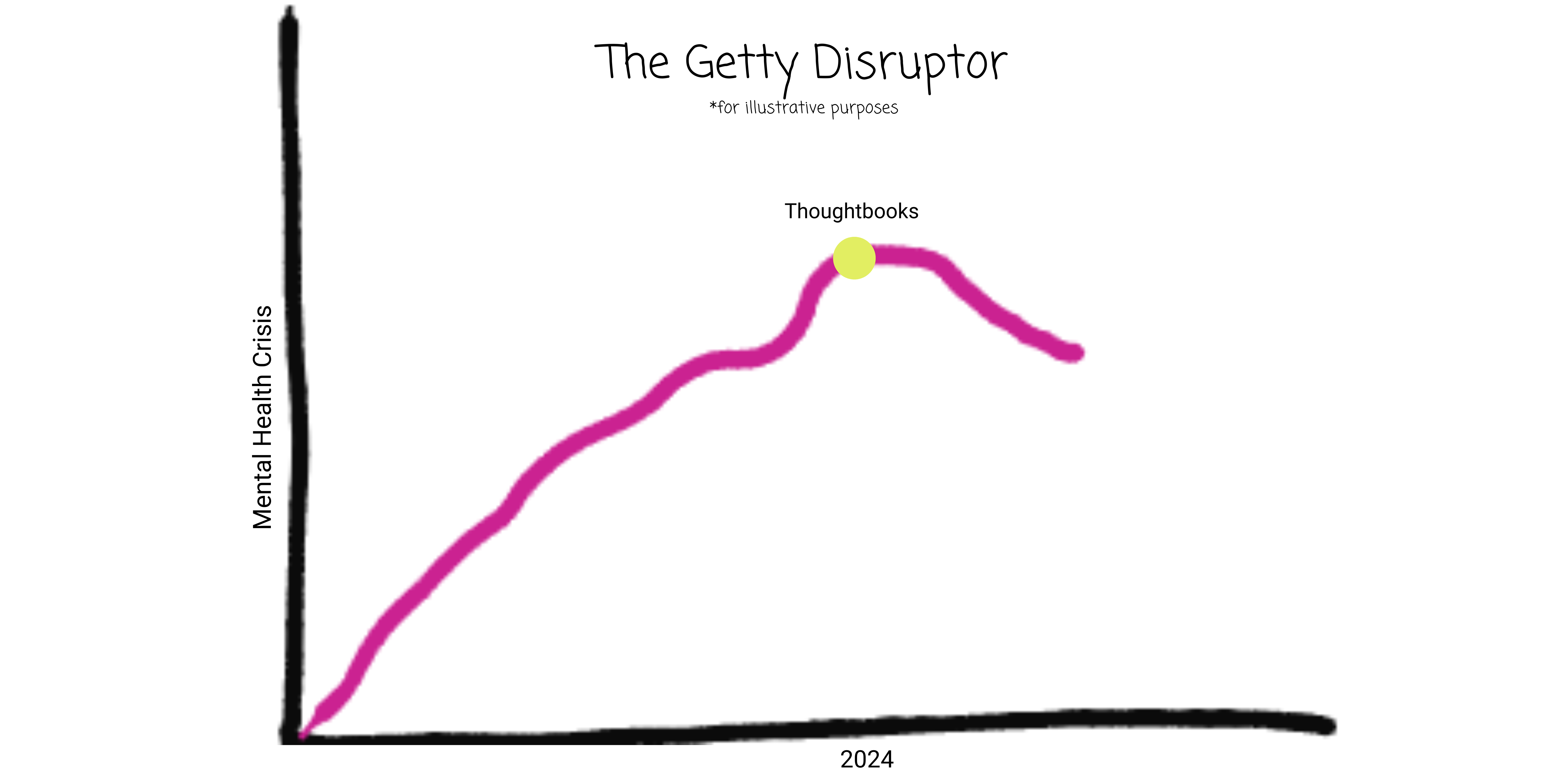
The concept of disruptors—products or innovations that radically change industries and improve everyday life—resonated with me when I read an article about how certain inventions had disrupted their fields. The article featured a line chart showing the impact of these disruptors over time and how they made life easier.
And that was the day a new goal of mine was born: create a disruptor that can be seen on a scale of how it improved the mental health crisis.
I can envision it now, a line chart showing the rise of depression and anxiety and then a dot representing the “Getty Disrupter” and depression and anxiety declining after it.
But how?
Like most disrupting ideas, this one is simple. If people understood how to manage their thoughts, they would gain the self-awareness needed to address common mental health issues before they become unmanageable.
Most common mental health issues like stress, anxiety, depression often stem from a lack of education about managing thoughts. Most people may not know about the importance of managing their thoughts (I didn’t.)
And if you knew how to manage your thoughts, you will manage stress by reframing negative thoughts, reduce anxiety through mindful awareness, and alleviate depressive symptoms by focusing on balanced thought patterns.
Without this education, negative thoughts build up, and stress, anxiety, or depression escalate to unmanageable levels. This is why depression and anxiety rates are rising alarmingly.
Therapists aren’t trained to teach basic thought management skills. When people seek therapy, therapists often have to address not only the patient’s issues but also teach general skills they weren’t specifically trained to teach. They start at a major disadvantage. (Some experts believe ….
If the average person had a basic understanding of thought management there would be no mental health crisis. Someone having trouble managing their mental wellness would be better equipped to speak to a therapist and recover quicker.
To disrupt the mental health crisis, we need a curated, straightforward, and relatable resource to teach individuals how to manage their thoughts.
Thoughtbooks are Born
When I first started looking into mental health I had what you could call a Tony Soprano mentality—I thought it was for suckers. But like Tony I started to see the benefits. And through research I made significant strides in managing my unhealthy thoughts, mental health, and emotions. (This resulted in my continual remission from c-PTSD, depression, and anxiety.)
After a while I noticed therapy was going a lot easier for me. I had enough awareness and I knew the thought concepts that were effecting me so I could easily explain them. My therapist said I was speeding trough the therapeutic process. A remarkable achievement given my background of emotional neglect, physical abuse, and living in fear.
My entire life was abuse. I did not know there were alternatives, and I will never be able to explain the surreal experience of being diagnosed with a broken heart. One therapist told me he did not think I would ever be able to recover.
Eventually, I felt ready to move on from weekly sessions and focus on living my life. My therapist agreed, and through tears I thanked her for seeing me at my worst.
We now speak on occasion when I have a thought or experience I am having trouble managing. I consider each session as me learning how to get to a new level of thought management. (I lightheartedly refer to my therapist as ‘the big boos’ and when I am having a particularly troubling thought I jokingly say I am going to bring it to ‘the boss’).
Now, I taken what I learned from therapy, along with a decade of reading, research, and self-experimentation, and compiled it into concise, practical books. This approach mirrors my career in tech operations—filling gaps. Just this time it is not a gap in an operational SOP, it’s a gap in mental health resources.
Thoughtbooks in Action
I started with a “simple guide” to calm your thoughts. Overthink is the first in a series of Thoughtbooks designed to help readers manage their thoughts. They are practical, engaging, and written with compassion.
It is exciting to be on “must-read” lists and receive editorial reviews like: “This book fills a much-needed niche in the self-help written market,” and to hear that it helps readers “create a kinder, more patient, healthier-thinking YOU.”
But reader reviews, showcasing specific examples of how the book has helped them manage life’s difficulties, will always be the most exciting.

Being a Disruptor is Scary
And I am terrified, but I am learning to work through the fear.
Dreaming big can sometimes feel absurd or unattainable, making it hard to share. I’ve faced ridicule for my dreams, which made me doubt my ability to achieve them.
So it’s surprising even to me that I’ve gathered the courage to pursue my dream and articulate it clearly. And I cannot hide that I envision a future where I am a Pulitzer Prize-winning author whose books have helped millions reconnect with themselves by learning to manage their thoughts.
I appreciate your support as I continue on this path.
Sign up for 1:1 or group coaching here
Check out Overthink on Amazon here
Sign up for the Thinkers newsletter below 👇
xx
Lyndsey
Thoughts?